

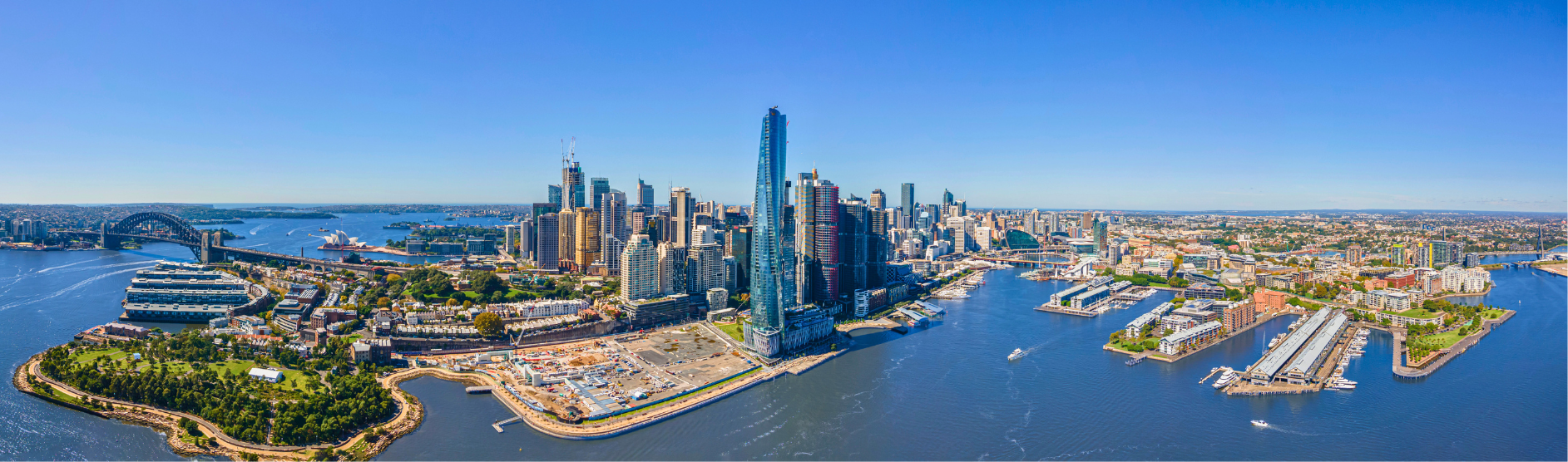
Australia's Green Building Revolution: 2025 Smashes Sustainability Records
)
Australia's built environment achieved unprecedented sustainability milestones in 2025, with over 4,700 projects earning certification under the Green Building Council of Australia's (GBCA) Green Star program. Ten exceptional buildings reached the pinnacle of environmental performance, securing top 6-Star Green Star Performance ratings and demonstrating that operational excellence in sustainability is now mainstream.
The Top 10 PerformersSydney Leads the Charge
Westpac Place at 275 Kent Street claimed the highest score of 91 points, earning certification in June 2025. Owned by Mirvac, this office tower features all-electric systems and high-performance facades that minimise emissions while prioritising occupant health.
Lendlease's International Towers 1, 2, and 3 at Barangaroo achieved 6-Star status in October 2025 with an average score of 86, showcasing advanced HVAC optimisation and biodiversity integration across the precinct.
Regional and Interstate Excellence
Village Centre in Batemans Bay demonstrated that sustainability extends beyond capital cities. Owned by Active Super and certified in June 2025 with 85 points, this project emphasises adaptive reuse and resilient infrastructure tailored for regional communities.
Brisbane's 275 George Street, managed by Charter Hall, scored 84 points with its net-zero-ready framework and circular economy principles in material selection. Santos Place at 32 Turbot Street pioneered industrial-scale electrification in a commercial setting, achieving 80 points.
Perth's Bankwest Place on William Street leveraged passive solar design suited to Western Australia's climate, tying at 82 points with Sydney's 1 Shelley Street.
Industry Leaders EmergeCharter Hall dominated the rankings, claiming five spots among the top performers. Lendlease and Mirvac also featured prominently, underscoring institutional leadership in driving sustainability outcomes. This concentration of certified assets among major property groups signals that green building is now central to investment strategy rather than a peripheral concern.
Beyond Design: Measuring Real-World PerformanceThe Green Star Performance v1.2 rating system evaluates actual building operations rather than design intentions alone. This distinction matters significantly because it proves these buildings deliver genuine environmental benefits during daily use.
Features driving top scores include rainwater harvesting systems achieving up to 92% potable water savings, solar offsets reducing grid reliance, smart ventilation prioritising indoor environmental quality, and tenant-flexible green leasing models encouraging sustainable behaviours.
The Green Star Buildings v1.0 framework is gaining traction for industrial properties and precincts, suggesting 2026 will build substantially on this foundation. These 2025 leaders provide blueprints for scalable green retrofits and new developments as Australia advances toward its net-zero goals.
Looking Ahead to 2026
GBCA Chief Impact Officer Jorge Chapa emphasised that sustainability is now embedded in the built environment's DNA. With certification volumes growing across diverse building types—from aquatic centres to adaptive reuse communities—sustainability's viability across all scales is proven.
The Green Star Buildings v1.0 framework is gaining traction for industrial properties and precincts, suggesting 2026 will build substantially on this foundation. These 2025 leaders provide blueprints for scalable green retrofits and new developments as Australia advances toward its net-zero goals.
Read full article: 2025 marked peak Green Star sustainability in Australian buildings